
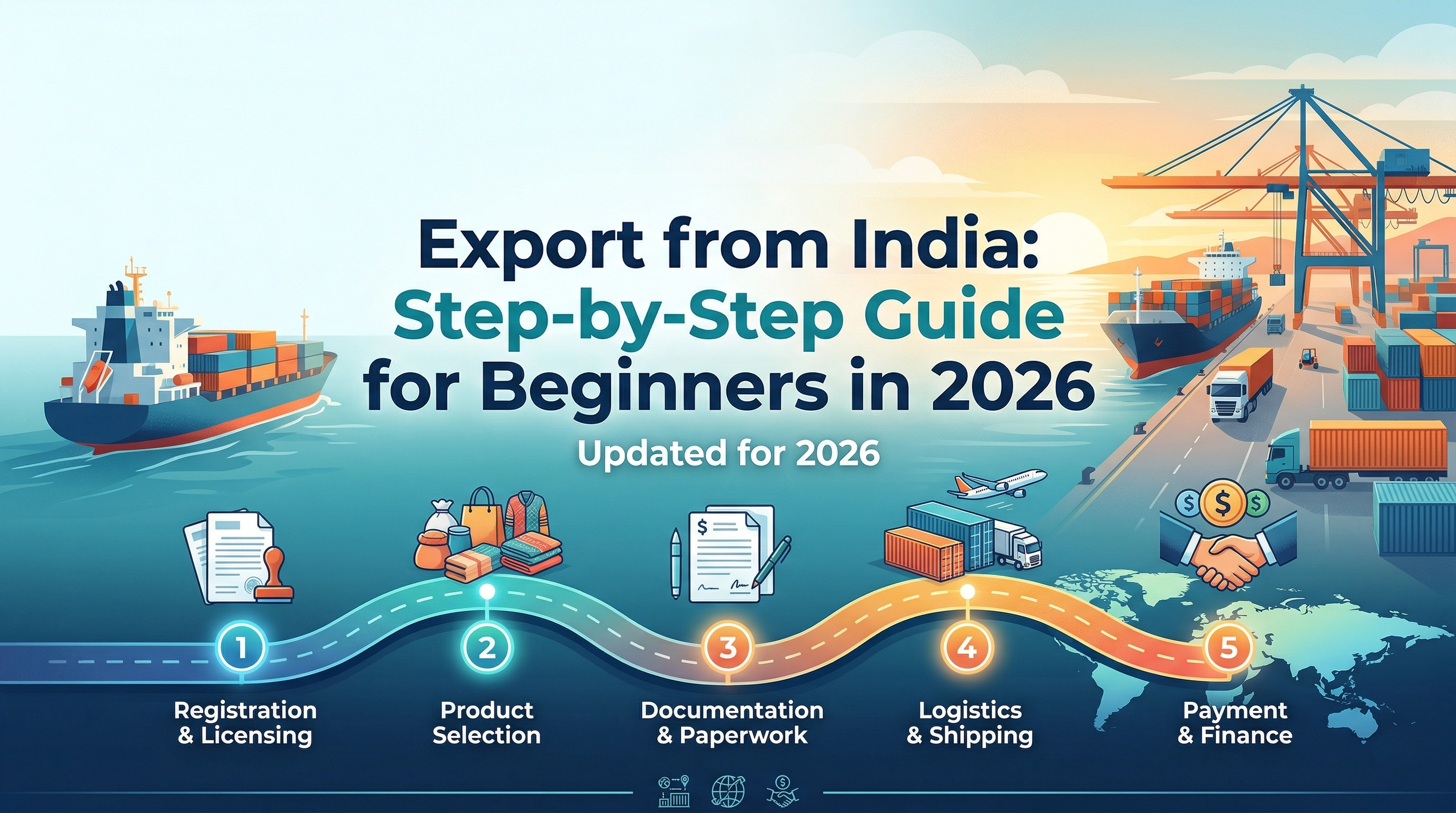
Entering the global market is an exciting opportunity for Indian entrepreneurs. With strong government support, digital infrastructure, and rising demand for Indian goods worldwide, 2026 is an excellent time to start exporting. This step-by-step guide will walk you through everything you need to know to begin your export journey from India.
Why Start Exporting in 2026?
India has become a global hub for products such as textiles, pharmaceuticals, engineering goods, handicrafts, and agricultural commodities. Government initiatives, simplified compliance systems, and digital trade platforms have made exporting more accessible than ever.
Whether you're a small business owner or a growing enterprise, exporting can:
- Increase revenue streams
- Expand your market reach
- Reduce dependency on local demand
- Enhance brand value globally
Step-by-Step Guide to Export from India
1. Choose the Right Product
Start by identifying a product with strong demand in international markets. Research trends, competition, and export potential. Ensure your product meets global quality standards.
Tip: Focus on products where India has a competitive advantage.
2. Set Up Your Business
You need a legally registered business entity such as:
- Sole Proprietorship
- Partnership Firm
- LLP (Limited Liability Partnership)
- Private Limited Company
Also, open a current bank account dedicated to business transactions.
3. Obtain IEC (Import Export Code)
The Import Export Code (IEC) is mandatory for exporting from India. It is issued by the Directorate General of Foreign Trade (DGFT).
Good news: The process is now fully online and quick to obtain.
4. Register with Export Promotion Council (Optional but Recommended)
Depending on your product category, registering with an Export Promotion Council (EPC) can provide benefits like:
- Market insights
- Trade fair participation
- Government scheme access
5. Understand Product Compliance & Documentation
Different countries have different regulations. Make sure your product complies with:
- Quality standards
- Labeling requirements
- Packaging norms
Common export documents include:
- Commercial Invoice
- Packing List
- Bill of Lading / Airway Bill
- Certificate of Origin
6. Find International Buyers
You can connect with buyers through:
- B2B marketplaces (like Alibaba, IndiaMART Global)
- Trade fairs and exhibitions
- Export agents or consultants
- Direct outreach via email or LinkedIn
7. Decide Pricing & Payment Terms
Set competitive pricing by considering:
- Production cost
- Shipping charges
- Customs duties
- Profit margin
Choose safe payment methods:
- Advance payment
- Letter of Credit (LC)
- Documents Against Payment (DP)
8. Arrange Logistics & Shipping
Select a reliable logistics partner for smooth delivery. Decide:
- Mode of transport (Air/Sea/Land)
- Shipping terms (FOB, CIF, etc.)
- Insurance coverage
Efficient logistics ensure timely delivery and customer satisfaction.
9. Customs Clearance
File shipping bills and submit required documents through Indian Customs. Many processes are now digitized, making clearance faster and more transparent.
10. Claim Export Benefits
Exporters in India can benefit from various government schemes such as:
- Duty Drawback
- RoDTEP (Remission of Duties and Taxes on Exported Products)
- MEIS (for specific sectors, if applicable updates)
These incentives help improve profitability. Enquire Now: 7777972073

